Forge Master
- 4.3
- Rating
- 1.00M
- Installs
- Free
- Price

 Analysis by App-foxy
I went into Forge Master expecting a compact crafting game, and that is mostly what I found: a strategy game built around making weapons and deciding how to use them. Its central idea is easy to understand, but it has more staying power than a simple tap-and-collect experience because every new piece of equipment invites a small decision. Do I spend materials on a reliable improvement now, or hold them for something that may help more later? That question gives the opening sessions a pleasant rhythm.
The game is developed by Lessmore UG and is free to download, with optional purchases ranging from $1.99 to $99.99 per item. It is rated Everyone 10+, runs on Android 8.0 or later, and currently sits at version 1.8.8. Those details matter less than the practical question: will the blacksmith theme still feel worthwhile once the first burst of curiosity disappears? In my experience, the answer depends on whether you enjoy gradual optimization more than constant action.
What the first week feels like
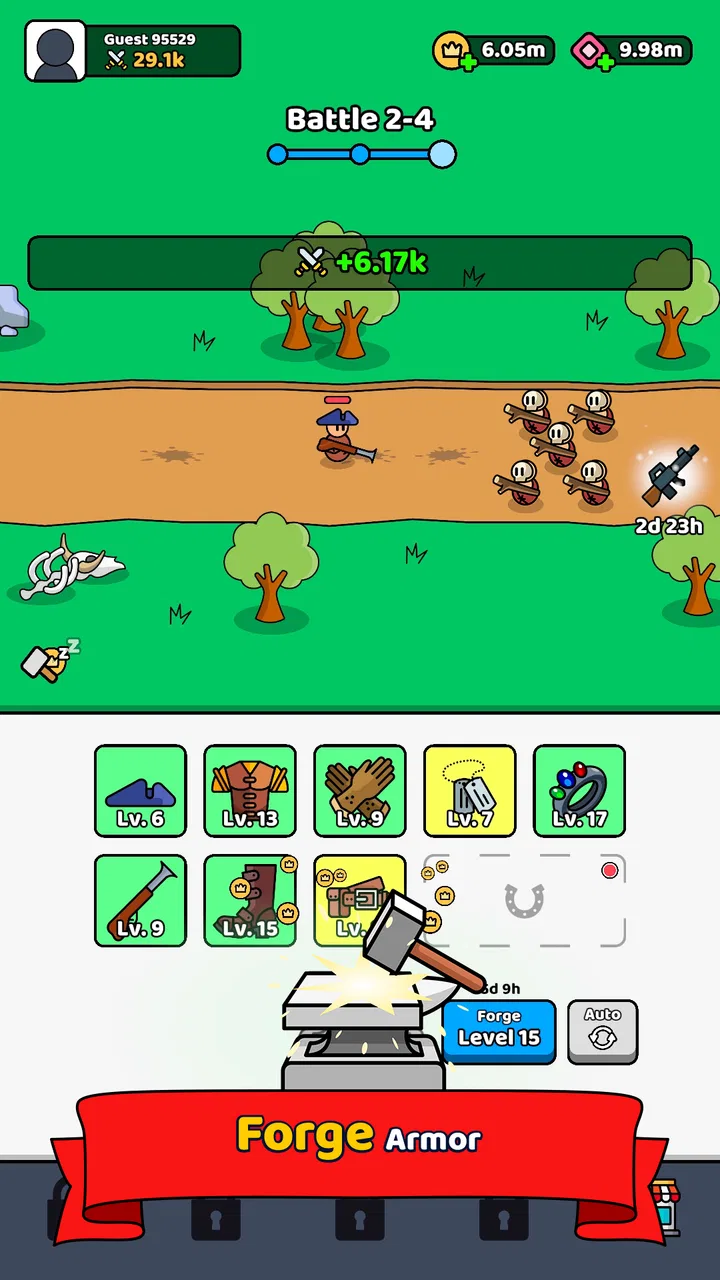
The strongest part of the first week is how quickly the basic loop makes sense. You gather what you need, work toward weapons associated with different civilizations, equip the results, and then consider how your next choice changes your progress. I never felt lost during the opening sessions, which is important for a game that asks me to think about resources rather than simply react to enemies or obstacles.
You May Also Like

 Blood Strike: 2.5 Anniversary
Blood Strike’s Loadouts Turn Every Drop Into a Tactical Gamble
A close look at Blood Strike’s custom loadouts: how fast access to signature weapons reshapes its battle royale rhythm, rewards preparation, and narrows the gap between fights.

 Pandora - Music & Podcasts
Pandora’s Music Is Easy to Start, but Harder to Recover
Pandora’s strength is its low-effort path from a seed to a station. Its weak spot is how much confidence it asks you to place in connection, setup, and quiet recovery.

 8 Ball Pool
 Is Built on Rivalries, Rematches, and Routine
A close look at the rivalries, rematches, shared routines, and unanswered safety questions that turn a quick pool match into a persistent mobile community.

 Samsung Music
’s Quiet Strength Is Playing What You Already Own
Its reach comes less from spectacle than from dependable access to a personal library. That simplicity is both the app’s strongest retention engine and its ceiling.

 AccuWeather: Weather Radar
AccuWeather Review: A Quick, Clear Forecast for Everyday Decisions
For everyday plans, the best forecast is the one you can understand quickly. AccuWeather makes rain timing, radar, and local conditions easy to act on, with a few trade-offs.

 Hill Climb Racing
Why Hill Climb Racing Still Turns Crashes Into One More Run
A tiny car, a bumpy hill and one more upgrade: Hill Climb Racing keeps resurfacing because its simple chaos makes every near-miss feel personal.
More From Our News Desk



That simplicity is also the reason the game is approachable. I could play for a short break without needing to remember a complicated control scheme. At the same time, the equipment focus gives the sessions a purpose. A newly forged weapon is not merely a decorative reward; it becomes part of the decision about how to prepare the next stage of progress. The best early habit is to pause before spending everything and ask which upgrade will actually change my immediate situation.
For a realistic everyday example, I can imagine opening it during a commute or while waiting for an appointment. I would check what I had available, finish a small crafting objective, equip the most useful weapon, and close the game without feeling that I had abandoned a long multiplayer commitment. That makes it a good match for players who prefer self-contained progress over games that demand a fixed schedule.
Why the civilization theme helps
The different civilizations give the crafting premise a sense of direction. Instead of treating every weapon as an interchangeable number, the theme encourages me to care about what I am building and where it fits in the wider collection. This is one of the less obvious strengths of the game: the subject matter makes ordinary progression feel more memorable than a generic series of equipment upgrades.
I also found that the theme changes how I judge a reward. A weapon can be interesting because it fills a practical need, but it can also be appealing because it represents a different style of smithing. That dual purpose adds variety during the first few sessions. Players who enjoy collecting themed items will probably get more from this than players who only want the fastest possible route to maximum power.
Still, the early charm has limits. The game does not appear designed to replace a large, story-heavy role-playing game or a deep competitive strategy title. Its decisions are more focused and its pace is more controlled. If you want complex diplomacy, a huge map, or constant tactical surprises, the blacksmith setting may feel narrow. If you want a manageable strategy game with crafting at its center, that narrowness is part of the appeal.
How I would approach the opening progression
My first practical tip is to avoid treating every new weapon as an automatic upgrade. The useful question is not “is this newer?” but “does this improve the way I am currently playing?” Holding a resource briefly can be smarter than immediately converting it into equipment that only offers a small benefit. That restraint makes the early game feel more strategic and prevents the usual problem of reaching a later decision with nothing left to spend.
A second tip is to separate experimentation from commitment. I would try unfamiliar equipment when the cost of being wrong is low, then reserve the more valuable materials for choices that support a clear plan. This is especially helpful for players who tend to spend quickly whenever a new crafting option appears. The game rewards curiosity, but it is more satisfying when curiosity is balanced with a little patience.
The free entry point also makes the first week easy to recommend. You can find out whether the crafting loop suits you before deciding whether optional purchases are worthwhile. I would not buy anything immediately. The better test is whether I still enjoy comparing weapons and planning upgrades after the novelty of the theme has settled.
Does it keep its value after the novelty fades?
The longer-term question is more demanding. A game can make a strong first impression and still become background noise once the initial collection goals are familiar. Forge Master has a reasonable chance of remaining useful for players who like incremental strategy, but its recurring value comes from the decisions around equipment rather than from a broad variety of activities.
That distinction is important. I would return to it when I wanted a focused session with a clear objective, not when I wanted a constantly changing adventure. The blacksmith loop works best as a repeatable routine: inspect the current situation, choose a crafting priority, equip thoughtfully, and leave once the next decision is clear. That makes it easy to fit around daily life, but it also means the game may feel repetitive to anyone who needs frequent changes of pace.
The public response suggests that the game has found an audience, with a 4.3 average from around 8.7 thousand ratings and more than 100 thousand installs. I read that as evidence of solid interest rather than proof that it will suit everyone. The number of players does not remove the central trade-off: this is a game about refining a narrow loop, not expanding into every possible strategy format.
Who is likely to keep playing
I think it has the best chance of earning lasting space on the phone of someone who enjoys collection goals, equipment comparisons, and gradual improvement. It is also a good fit for players who like the idea of a strategy game but do not want to learn a large rule set before making their first meaningful choice. The civilization angle gives collectors a reason to continue, while the weapon decisions give planners something to think about.
It may also work for people who enjoy alternating between active and passive attention. I can imagine playing more carefully when I have time, then returning later simply to check progress and decide what to forge next. That flexibility is valuable because it does not force every session to be a major event.
I would be less likely to recommend it to someone who needs a strong narrative, direct player-versus-player pressure, or highly varied missions. It is also not the best choice for a player who dislikes resource management. The central pleasure comes from deciding what deserves investment, so removing that friction would remove much of the game’s identity.
The role of optional spending
Because the game is free with in-app purchases, I would approach the store carefully. The available items range from $1.99 to $99.99, which is a wide gap. That does not automatically make the free experience poor, but it does mean that spending can become a personal boundary rather than a simple one-time decision.
My advice is to treat purchases as a convenience choice, not as part of the basic tutorial. First learn how quickly the ordinary progression satisfies you. If the game remains enjoyable without spending, an occasional small purchase may feel reasonable. If the loop already feels repetitive, paying more is unlikely to solve the underlying issue. The most important trade-off is whether money reduces waiting or decision pressure without taking away the satisfaction of earning equipment yourself.
This is another reason I would not judge the game from a short trial alone. The first sessions can make every reward feel exciting. A more honest test is to play until you have established a routine, then ask whether you are returning because you still want to make strategic choices or simply because the game has become a habit.
Maintenance, fatigue, and the everyday cost of returning
The maintenance burden is fairly manageable, but it is not zero. Any equipment-focused game asks me to keep track of what I have, what I need, and which items deserve attention. That mental bookkeeping is part of the strategy, yet it can become tiring when I am playing without a clear target. The game is most comfortable when I enter with a small plan instead of opening it automatically and hoping the next reward creates motivation.
My preferred routine would be to choose one improvement goal per session. For example, I might focus on preparing a particular weapon rather than trying to optimize every available option at once. This reduces clutter and makes progress easier to notice. It is a useful workflow because it turns the game from an endless inventory check into a series of manageable projects.
Another non-obvious trade-off is that collecting can compete with efficiency. A player who wants to see different civilizations and weapons may spend resources on variety, while a player focused on advancement may prefer to repeat the strongest practical choices. Neither approach is wrong, but they lead to different experiences. The game is more enjoyable when I decide which kind of satisfaction I want before I start spending.
Where repetition can set in
The main source of fatigue is the possibility that forging and equipping begin to feel like administration rather than strategy. Early on, every weapon suggests a new possibility. Later, familiar decisions can lose their weight if the next improvement feels too similar to the last one. That is the point where I would take a break rather than forcing a daily streak that no longer feels rewarding.
The narrow focus can also expose differences between players. Someone who enjoys optimizing small advantages may find repetition calming, almost like organizing a collection. Someone who needs dramatic changes in scenery or mechanics may see the same focus as a limitation. Compared with a conventional action game, this offers less immediate excitement. Compared with a large strategy game, it offers less system depth. Its advantage is the middle ground: more thought than a purely casual tap game, less commitment than a sprawling campaign.
I would also watch for fatigue caused by overchecking. Opening the game repeatedly without enough resources or a meaningful decision can make the loop feel slower than it really is. A better habit is to return when I have a specific reason: a weapon to finish, a choice to test, or a resource threshold worth reaching. That small change keeps the game from becoming an obligation.
Device and audience considerations
The age rating is Everyone 10+, and the minimum Android requirement is 8.0. That makes the technical entry point relatively accessible for people using older compatible phones, although the quality of any individual session will still depend on the device itself. I would check that the phone has enough comfortable storage and battery for regular play, especially if I planned to make it part of a daily routine.
The game is also a reasonable option for a younger player who likes historical themes and collecting, provided a parent is comfortable with optional purchases. The price range makes purchase controls worth discussing before handing over the phone. That is not a criticism unique to this title; it is simply sensible whenever a free game includes paid items.
On iOS or Android, I would make the same decision based on the loop rather than the platform. The important question is whether the device is being used for short strategic sessions or whether the player expects a large, cinematic experience. Forge Master makes more sense in the first case.
My long-term verdict
After the first-week appeal fades, Forge Master earns continued attention only if its focused blacksmith routine matches your idea of relaxation. I like that it gives crafting a strategic purpose and that weapons connected to different civilizations make the collection feel more distinctive. I also appreciate that the free starting point lets me test the central loop before considering optional purchases.
My reservations are equally clear. The game can become repetitive if I need constant novelty, and the equipment decisions may feel like routine maintenance when I play without a goal. The broad purchase range means I would keep spending under deliberate control, especially after the early excitement makes every improvement seem essential. These are not deal-breakers, but they shape who should install it.
The lasting value comes from purposeful small decisions, not from endless novelty. I would recommend it to a friend who enjoys crafting, collecting, and improving a loadout in short sessions. I would suggest a different strategy game to someone looking for a rich story, competitive tension, or a constantly expanding set of mechanics. For the right player, this is a pleasant phone companion that can settle into a useful habit; for the wrong player, the same focused design will reveal its limits quickly.
Lessmore UG has built a game with a clear identity rather than an overloaded one. That clarity is its greatest strength and its main test. If I return with a specific forging objective, the experience remains satisfying. If I open it only out of routine, the appeal thins out. My final recommendation is therefore positive but selective: try the free version, play long enough to reach a normal routine, and keep it only if choosing what to forge still feels like a decision you genuinely want to make.
FAQs for Forge Master
01What is Forge Master and how does it work?
Forge Master is a mobile game that lets players step into the shoes of a blacksmith, crafting weapons and armor for adventurers. The game combines strategy with resource management, allowing players to gather materials, upgrade their forge, and fulfill customer orders. It’s available on both Android and iOS platforms.
02Is Forge Master free to play, or does it have in-app purchases?
Forge Master is free to download and play, but it includes optional in-app purchases. Players can buy various resources, special items, or upgrades to enhance their gameplay experience. While purchases can speed up progress, they are not necessary to enjoy or advance in the game.
03What are the main features of Forge Master?
Forge Master offers a variety of features including a crafting system, resource management, and customer interaction. Players can upgrade their forge, unlock new crafting blueprints, and participate in special events. The game also includes daily challenges and leaderboards to keep players engaged and competitive.
04Can Forge Master be played offline?
Forge Master requires an internet connection to access all its features, including leaderboards and events. However, some basic elements of the game, such as crafting simple items and managing resources, can be played offline. To fully enjoy the game, an online connection is recommended.
05What age group is Forge Master suitable for?
Forge Master is suitable for players aged 12 and above. The game contains mild fantasy violence and requires strategic thinking and resource management, making it appealing to both teenagers and adults. Parental guidance is suggested for younger players due to the complexity and strategic elements involved.
Pros
- Intuitive interface for easy gameplay.
- High-quality graphics enhance experience.
- Regular updates with new features.
- Engaging storyline keeps players hooked.
- Offers both solo and multiplayer modes.
Cons
- Requires high-end device for optimal performance.
- In-app purchases can be expensive.
- Occasional server connectivity issues.
- Limited tutorial for new players.
- Some features locked behind paywall.

Forge Master
Gallery